
Listen to this episode of the Crazy Joe’s Drapery and Blinds podcast on Spotify, Apple Podcasts, and Amazon Music. Free in-home consultations across Toronto and the GTA — call (905) 848-2181.
The biggest window treatment mistakes homeowners make — we've seen every version of this in homes across Toronto and the GTA over 55 years. Some mistakes cost money. Some just look wrong for years and nobody can figure out why the room doesn't feel quite right. This episode goes through the most common ones so you can avoid them entirely.
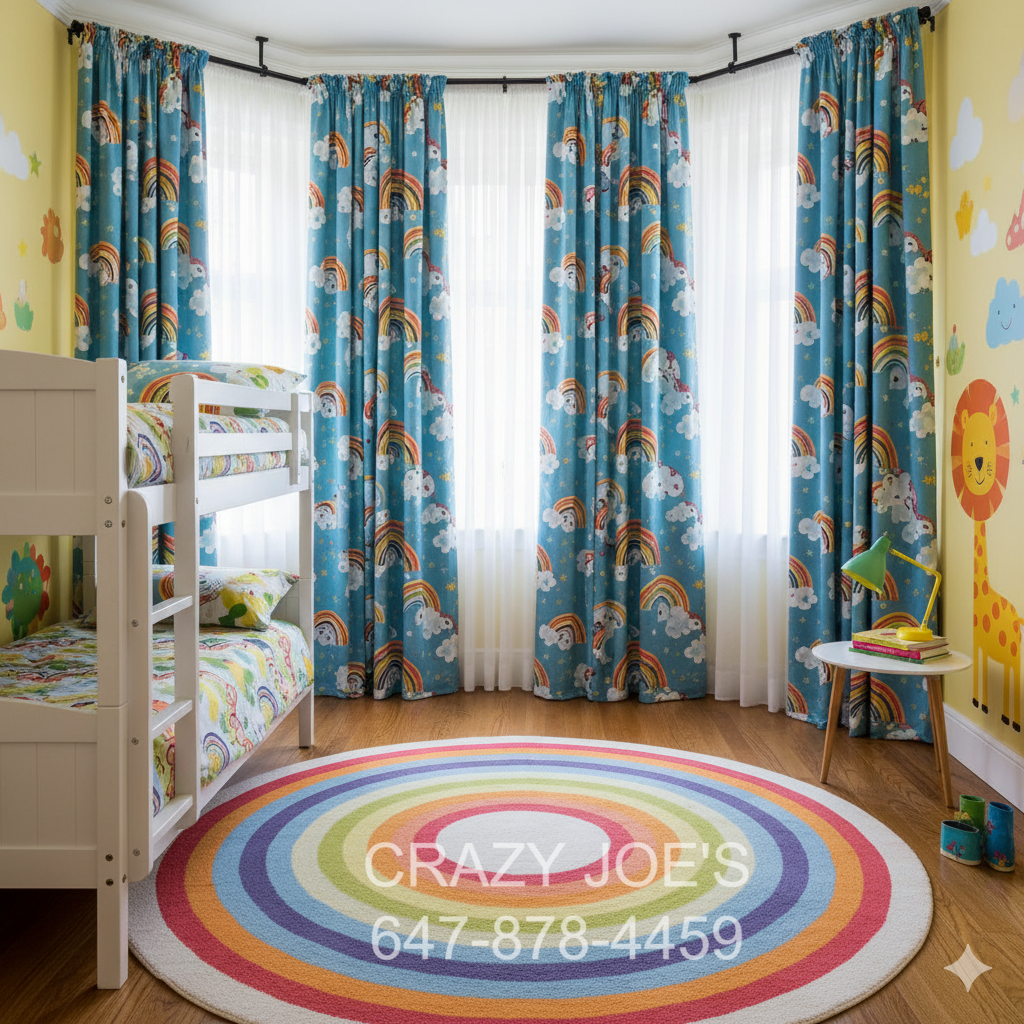
Mistake one — hanging curtains too low. This is the most common window treatment mistake we see, by a significant margin. People mount the curtain rod right at the top of the window frame — sometimes because that's where the previous owners put the hardware, sometimes because it just seems like the logical place. The result is a room that feels lower and a window that feels smaller than it is. The ceiling above the rod looks like dead space. The drapes, however beautiful, are fighting the architecture rather than working with it. The fix — move the rod up. As high as possible. Four inches below the ceiling is a guideline. At the ceiling is even better. The room immediately feels taller and the window feels more generous. This one change, with no other modification, can transform the feel of a room. We say this to every customer who asks why their window treatments look slightly off.
Mistake two — curtains that are too short. The kissing cousin to mistake one. Curtains that end at the windowsill, at mid-wall, or even a couple of inches above the floor all read as unfinished. The eye expects floor-length drapes to reach the floor. When they don't — even by a few inches — it reads as an error. Like the curtains shrank in the wash. Floor-length means to the floor. A light graze — half an inch touching the floor — is clean and modern. A small break — an inch or two of fabric resting on the floor — is more relaxed and works in bedrooms and casual spaces. Anything ending above the floor, unless it's a specific design choice at the sill for a cafe curtain look, is a mistake.
Mistake three — measuring wrong and ordering the wrong size blind. A blind that's too narrow leaves visible gaps on the sides where light comes through. A blind that's too wide for an inside mount won't fit in the frame. Both situations are frustrating and expensive to fix because custom blinds can't be returned or exchanged. The error usually comes from measuring the glass area instead of the full window opening, measuring once instead of multiple times, or not accounting for the natural variation in window dimensions. Windows in Toronto homes — especially older homes — are rarely perfectly square. The solution is to measure carefully with a steel tape, measure at three points for both width and height, and use the smallest measurement. Or call us and let us measure for you — that's literally part of what we do.
Mistake four — choosing fabric based on a small sample alone. A two-inch fabric swatch looks beautiful on a showroom table or on a website photo. The same fabric covering six feet of window in your living room — in your light, against your walls, at full scale — looks completely different. Colours shift dramatically with different light sources. A fabric that looks warm and neutral under showroom lighting might look cold and flat under your window's north-facing daylight. A fabric that looks subtle at two inches might look very intense at full blind scale. Always try to see samples in your own space before committing to custom orders. We bring samples to homes during consultations specifically for this reason. Seeing a large sample against your wall in your actual light takes the guesswork out of the decision.
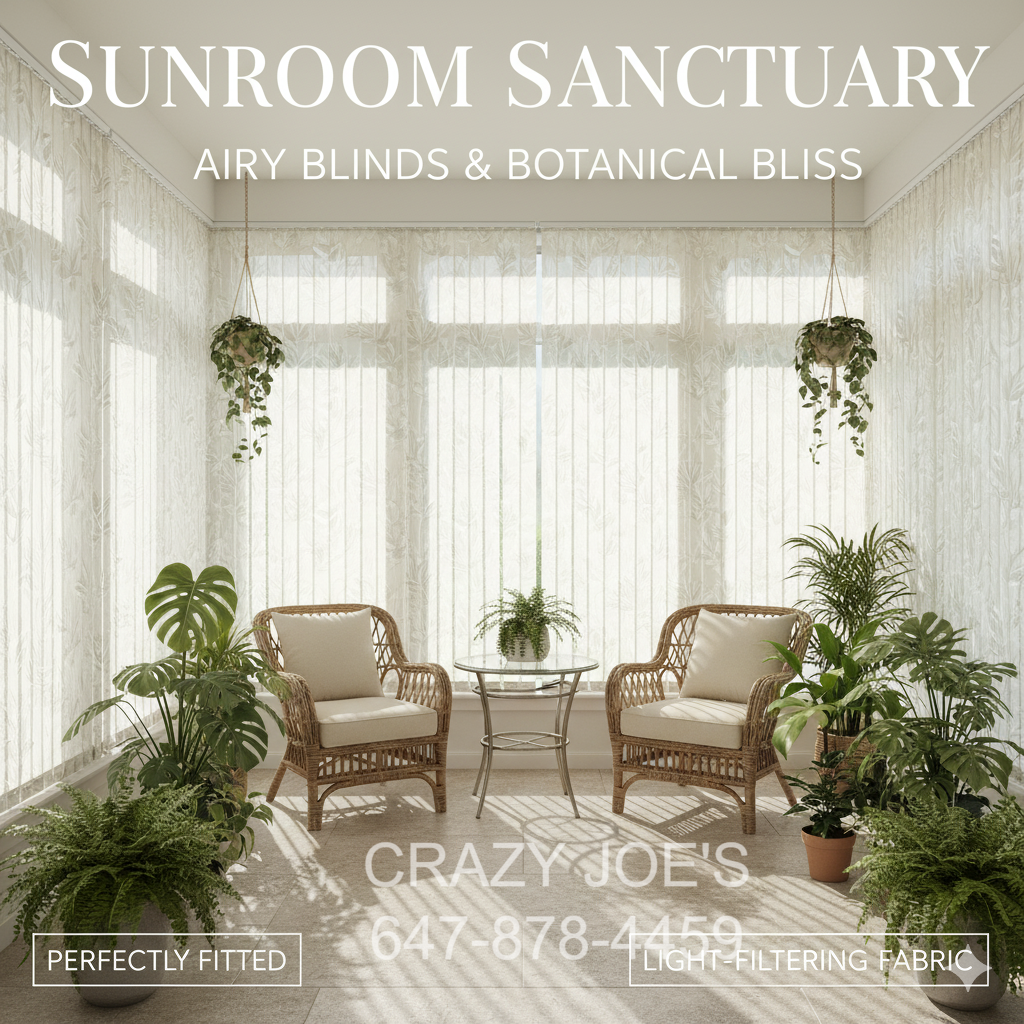
Mistake five — ignoring the direction your window faces. South and west-facing windows get intense direct sun. What works on a north-facing window is completely wrong for a south-facing one. A light filtering blind on a south-facing living room window in July makes the room uncomfortably bright and hot. The same blind on a north-facing bedroom window gives beautiful soft light. The window's orientation determines what the blind needs to do. For south and west-facing windows — consider solar shade fabrics with a lower openness factor, or blackout options for rooms where heat and glare are significant problems. North-facing windows are much more forgiving and lighter fabrics work well.
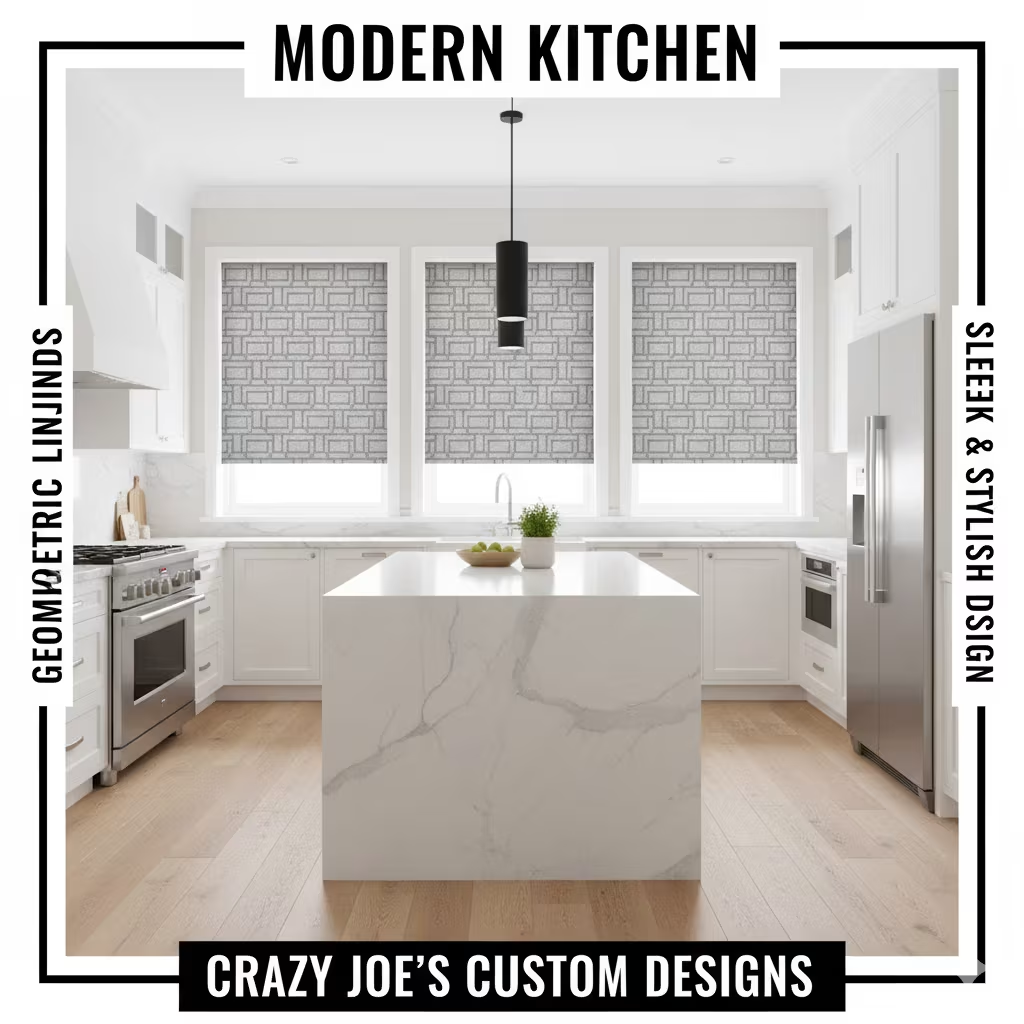
Mistake six — mismatched treatments across an open-plan space. Open-plan living is the standard in most Toronto new builds — kitchen, dining, and living areas all sharing the same space and often the same windows. Choosing different blind styles, different colours, or different hardware in adjacent windows in an open space looks disjointed. The eye travels across the space and registers inconsistency as disorder. In an open-plan area, window treatments should be coordinated — same product, same colour, same hardware. Variations are fine between floors or rooms with doors between them, but within an open space, consistency creates cohesion.
Mistake seven — choosing based on price alone. The cheapest blind option is often fine for a utility room, a basement, or a guest bedroom that gets minimal use. It's not the right approach for your main living spaces. Cheap blinds look cheap. The fabric is thinner, the hardware is lighter, the finish is inconsistent. More significantly, cheap blinds don't last. A quality blind installed in a living room or bedroom should last ten to fifteen years with normal use. A cheap blind from a big box store might look acceptable for two years and then fade, warp, or break. Investing in quality window treatments in the rooms you see every day pays off in daily satisfaction and longevity. In less important spaces — a laundry room, a storage area — economical is absolutely fine.
Mistake eight — not thinking about hardware. The curtain rod, the brackets, the rings, the finials — these elements are visible and they affect the overall quality of the finished look. Beautiful drapes on a flimsy-looking rod are like an expensive painting in a cheap frame. The hardware doesn't need to be extravagant, but it should be proportional to the drapes and suit the style of the room. In a modern minimal space — a clean matte black or brushed brass rod looks intentional and right. In a traditional space — a more classical finial and rod profile. In a coastal or relaxed space — a natural wood rod or a simple rope-effect hardware.
Mistake nine — not getting a professional consultation for a major installation. For a single small window — buying a standard roller blind and mounting it yourself is completely reasonable. For a large open-plan space, floor-to-ceiling windows, a major bedroom renovation, or a full condo outfit — getting a professional in to advise, measure, and install is almost always worth the investment. The risk of an expensive mistake is too high, and the value of getting it right the first time is significant. At Crazy Joe's Drapery and Blinds, our consultations are free and there's no obligation to buy. We come to your home, look at the space, understand what you're trying to achieve, and tell you honestly what we recommend. Most people find that one conversation saves them from at least one expensive mistake.
Call us at Crazy Joe's Drapery and Blinds. We'd rather give you good advice before you buy than see you living with a mistake that we could have prevented.
Crazy Joe’s Drapery and Blinds has been Ontario’s trusted window treatment specialist since 1965. We offer custom drapes, custom blinds, motorized blinds, plantation shutters, roller shades, and drapery hardware — all custom-made in our Toronto factory. Free in-home consultations and free measurements across Toronto, Mississauga, Brampton, North York, Etobicoke, Scarborough, Vaughan, Thornhill, Burlington, Hamilton, Oakville, Ajax, Oshawa, Woodbridge, and Aurora.
Visit crazyjoes.com/ or call (905) 848-2181 to book your free consultation today.